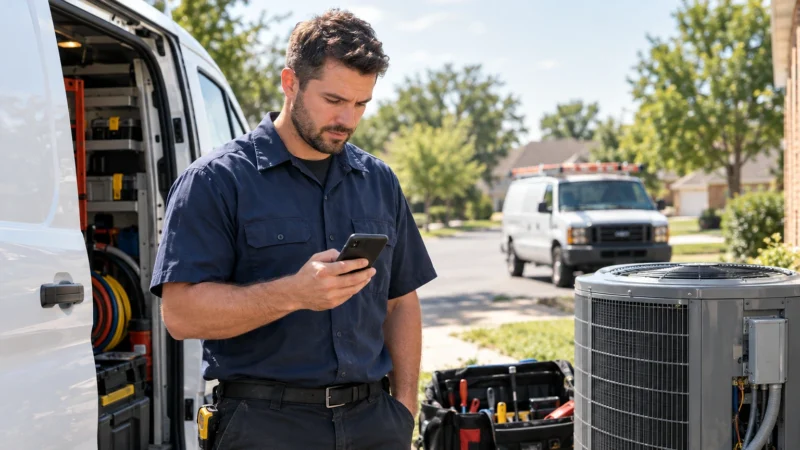
Your tech shows up for a “routine” maintenance call and finds a cracked heat exchanger nobody caught last spring. Now you’re explaining to the customer why a $189 tune-up missed a safety issue that’s about to cost them $6,000. That gap is exactly what a real HVAC preventative maintenance program is supposed to close.
That’s the gap between checking boxes and running a real hvac preventative maintenance program. Done right, PM work fills your slow-season schedule, catches failures before they become emergencies, and turns one-time customers into contracts. Done sloppy, it’s just a truck roll with a clipboard.
Why HVAC Preventative Maintenance Makes or Breaks Your Service Business
HVAC preventative maintenance isn’t a favor you do for customers. It’s the backbone of predictable revenue.
Contractors running membership-based maintenance agreements report retention rates north of 80% year over year, according to service industry benchmarking from Service Roundtable. Compare that to break-fix customers, who shop three companies every time a system dies.
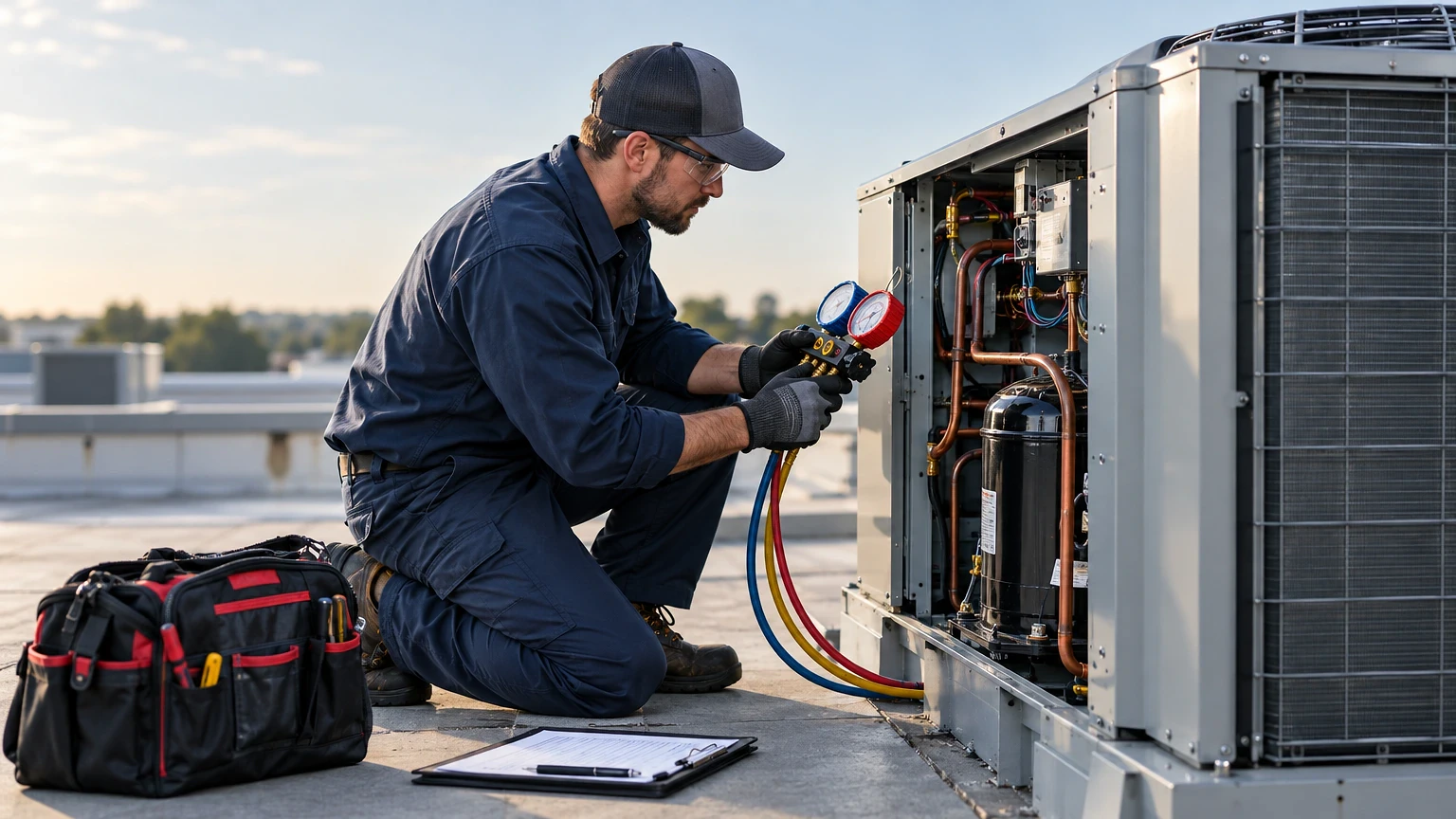
Think about a typical spring changeover call. A tech spends 45 minutes on a straightforward AC tune-up: checks refrigerant charge with a manifold gauge set, tests capacitor microfarads, cleans the condenser coil, checks static pressure across the coil. If the capacitor reads 15% below rated spec, that’s a $30 part swapped now instead of a no-cool call in July.
The math works because HVAC preventative maintenance visits have a high first-time fix rate, usually well above 90% since you’re not diagnosing a failure under pressure. Emergency calls run the opposite direction: more callbacks, angrier customers, thinner margins because you’re eating overtime labor.
Margins on maintenance agreements typically run higher than repair work too, since parts costs are minimal and you’re selling labor plus peace of mind. A tech who finds one failing capacitor or one refrigerant leak during a PM visit often converts that into a repair ticket worth more than the maintenance fee itself.
Building a Maintenance Checklist That Actually Gets Followed
A checklist only works if your techs use it instead of eyeballing the system for five minutes and calling it done.
Ready-to-Use PM Checklist Template
Use this as your baseline for a standard split-system cooling and heating maintenance visit. Adjust line items for package units, mini-splits, or commercial rooftop units.
Cooling System Checks
- Measure temperature split across the evaporator coil (target 16-22°F depending on conditions)
- Check refrigerant charge using superheat/subcooling method with a digital manifold
- Test capacitor microfarad rating against nameplate spec
- Inspect contactor for pitting and measure amp draw on compressor
- Clean condenser coil with coil cleaner and low-pressure rinse
- Check condensate drain line, flush with vinegar or compressed air
Heating System Checks
- Inspect heat exchanger with a borescope or flashlight for cracks and rust-through
- Test flame sensor microamp reading (typically should read above 2 microamps)
- Check gas pressure at manifold with a manometer
- Verify combustion air venting is clear and properly pitched
- Test limit switches and rollout switches for proper operation
- Measure temperature rise across the furnace against nameplate range
General System Checks
- Replace or inspect air filter, note MERV rating and next change date
- Check thermostat calibration and battery backup
- Inspect ductwork for visible leaks or disconnected runs
- Tighten electrical connections and check for burnt terminals
- Lubricate motor bearings if applicable
- Document static pressure readings for airflow diagnostics
A tech running through this list on a two-story home with a 3-ton system should budget 60-75 minutes. That buys a thorough visit, not the rushed 20-minute drive-by some franchise operations push to hit volume numbers.
Print this checklist or build it into your field service software as a digital form. Either way, require photo documentation on capacitor readings and heat exchanger inspection. That protects you legally and gives the office something to show the customer besides your word.
Seasonal Scheduling: Spring and Fall Tune-Up Timing
Timing your HVAC preventative maintenance push wrong means you’re competing with every other contractor for the same week of appointments.
Spring cooling tune-ups should get scheduled starting in February, not April. By the time daytime temps hit 75°F, every homeowner in your service area wants same-week service, and you’re stuck overbooked with no-cool emergencies instead of running planned maintenance.
Fall heating checks work the same way in reverse. Push your outbound calls in September before the first cold snap. A tech doing a heating tune-up in October has time to source a cracked heat exchanger replacement before the customer is sitting in a 58°F house.
Route density matters here too. If you’re running maintenance agreements, cluster your spring visits by ZIP code instead of crisscrossing the service area. A tech who runs 8 PM visits in one neighborhood loses way less windshield time than one bouncing across town for 5 stops.
Consider a twice-yearly cadence as your default: one cooling visit in spring, one heating visit in fall. Some contractors sell a single annual visit instead. Two visits per year gives you two touchpoints for upsell conversations. It also gives two chances to catch a developing failure before it’s a 2am call.
Choosing Between Manual Tracking and Software-Based HVAC Preventative Maintenance
Every growing contractor hits this decision point: keep running maintenance agreements off a spreadsheet, or move to dedicated software.
Option A: Spreadsheet and Paper-Based Tracking
This works fine under roughly 50 active agreements. You maintain a spreadsheet with customer name, equipment age, filter size, last visit date, and next due date. Dispatch pulls it manually each month and calls to schedule.
The upside is zero software cost and no learning curve. The downside shows up fast once volume grows. Nobody flags overdue accounts automatically. Renewal reminders get missed. A dispatcher on vacation means agreements slip through the cracks for two weeks.
Manual tracking also makes it hard to prove ROI on your HVAC preventative maintenance program. You can’t easily pull a report showing how many agreement customers converted to repair tickets last quarter.
Option B: Field Service Management Software
Platforms like ServiceTitan, Housecall Pro, and FieldEdge build maintenance agreements directly into scheduling and dispatch. The software auto-generates renewal reminders, tracks equipment history by serial number, and lets techs pull up prior visit notes on a tablet before they knock on the door.
The real value shows up in reporting. You can see agreement attach rate by tech, average repair revenue generated per PM visit, and which technicians have the best conversion rate turning a tune-up into a sold repair.
Pricing on these platforms runs on a per-user or per-technician subscription model, so a five-truck shop pays differently than a twenty-truck operation. Most contractors running more than 100 agreements find the automated renewal and route-optimization features pay back the subscription within a few months through reduced admin time and higher renewal rates.
If you’re under 50 agreements, stick with Option A and revisit the decision as you scale. Past that point, the manual system starts costing you more in missed renewals than the software subscription would.
Pricing Your Maintenance Agreements Without Underselling the Work
A lot of contractors price HVAC preventative maintenance agreements too low because they’re thinking of it as a loss-leader instead of standalone profitable work.
Calculate your price around actual labor time plus a filter or two, then add margin the same way you would on any service call. A 60-minute visit at your standard labor rate, plus a small parts allowance, should land you a fair agreement price without discounting so hard that the visit barely covers gas and drive time.
Bundle two visits a year into one annual agreement price, billed either upfront or monthly through auto-draft. That gives you predictable recurring revenue. It also gives the customer a lower per-visit cost than booking each tune-up separately. Monthly auto-draft billing, in particular, improves retention because customers rarely cancel a small recurring charge the way they’d balk at a large annual invoice.
Don’t forget priority scheduling and discounted repair rates as part of the agreement value. Customers on a maintenance plan should get bumped ahead of one-time callers during a heat wave. That perceived value justifies the price and gives your CSRs (customer service representatives) a real selling point on the phone.
Common Failure Points That Get Missed on Rushed Visits
Speed kills PM quality faster than anything else. Here’s where corners get cut and what it costs you later.
Techs skip static pressure readings because they take an extra 5 minutes with a manometer and hoses. Skipping this means you miss undersized ductwork or a dirty coil that’s strangling airflow, both of which shorten compressor life and drive up utility bills the customer will eventually complain about.
Capacitor testing gets skipped because the part “looks fine.” Capacitors don’t fail visually first, they fail electrically. A cap reading 20% under spec might run another six weeks or might die in the middle of a heat wave. Testing takes 90 seconds with a multimeter set to capacitance mode.
Heat exchanger inspection gets rushed or skipped entirely on gas furnaces because it requires pulling the burner assembly and using a borescope or mirror. This is the single highest-liability item on the entire checklist. A cracked heat exchanger can leak carbon monoxide into the living space, and skipping this check is how contractors end up in court.
Condensate drain lines get a quick look instead of an actual flush. A partially clogged line won’t show a problem in February, but by August, algae buildup causes a float switch trip or a ceiling leak on a second-floor air handler.
Refrigerant charge gets “topped off” without diagnosing why it was low in the first place. Every low charge is masking a leak somewhere. Adding refrigerant without a leak search is a band-aid that costs the customer money and costs you a callback in three months.
Turning HVAC Preventative Maintenance Visits Into Recurring Revenue
A solid hvac preventative maintenance program is the difference between chasing emergency calls all summer and running a predictable, profitable schedule.
The contractors who win with maintenance agreements treat every PM visit as both a safety inspection and a sales conversation, not a rushed checklist to survive. They train techs to document findings with photos. They price agreements to reflect real labor value instead of a loss-leader discount. They also use software or disciplined manual tracking so nothing slips through the renewal cracks.
Build the habit of scheduling PM visits ahead of the seasonal rush. Staff them with techs who won’t skip the heat exchanger inspection to save ten minutes. Then price the work like it matters. That’s what separates a shop running a real maintenance program from one just handing out tune-up coupons.
Frequently asked questions
How often should HVAC systems get preventative maintenance?
Most residential split systems need two visits a year, one for cooling in spring and one for heating in fall. Commercial rooftop units with heavier run hours sometimes need quarterly checks, especially in restaurants or facilities running equipment nearly year-round.
What’s a fair price to charge for a maintenance agreement?
Base your price on actual labor time plus a small parts allowance for filters, then apply your standard margin the way you would on any service ticket. Bundling two visits into one annual price, with monthly auto-draft billing as an option, tends to improve customer retention over billing each visit separately.
What’s the biggest liability risk during a PM visit?
Skipping the heat exchanger inspection on gas furnaces is the highest-risk shortcut a tech can take. A cracked exchanger can leak carbon monoxide into the home, and missing it during a documented maintenance visit creates serious legal exposure for your company.
Should I use software to manage maintenance agreements?
Under about 50 active agreements, a spreadsheet usually works fine. Past that volume, platforms like ServiceTitan, Housecall Pro, or FieldEdge earn their subscription cost back. You get automated renewal reminders and better route planning. Reporting also shows which techs convert PM visits into repair revenue.
How long should a proper PM visit take?
A thorough cooling or heating tune-up on a typical residential system takes 60 to 75 minutes when done right, including capacitor testing, static pressure readings, and a real heat exchanger inspection. Anything rushed to 20 minutes is a drive-by, not real preventative maintenance.