Is HVAC maintenance a loss leader or a profit center? Most shops get the answer wrong because they price the visit, not the relationship. Get your HVAC maintenance cost right and a properly structured agreement should run 35-50% gross margin once you factor in parts, labor, and dispatch overhead.
If your maintenance pricing barely covers the technician’s drive time, you’re subsidizing your best customers while starving your service board. Let’s fix the math.
What Actually Drives HVAC Maintenance Cost
Your cost per maintenance visit isn’t just labor and a filter. It’s loaded labor rate, drive time, consumables, and the admin hours spent scheduling and invoicing the agreement.
A typical 90-minute residential tune-up costs a contractor somewhere between $45 and $90 in direct labor, depending on region and tech pay scale. Add a filter, coil cleaner, and maybe a capacitor check, and parts run another $10 to $25. That’s your floor, not your price.
Dispatchers often forget the soft costs. Someone has to schedule the visit, send the reminder, process the card, and handle the reschedule when the homeowner isn’t home. On a tight route, that admin overhead adds up to real money across a thousand-agreement book.
Techs using ServiceTitan or similar field service platforms can pull historical cost-per-visit data by technician and zip code. If you’re still estimating maintenance cost off gut feel, you’re leaving margin on the table every single visit.
Pricing Maintenance Agreements to Cover Your HVAC Maintenance Cost
Here’s a straightforward framework for setting agreement pricing that actually protects margin.
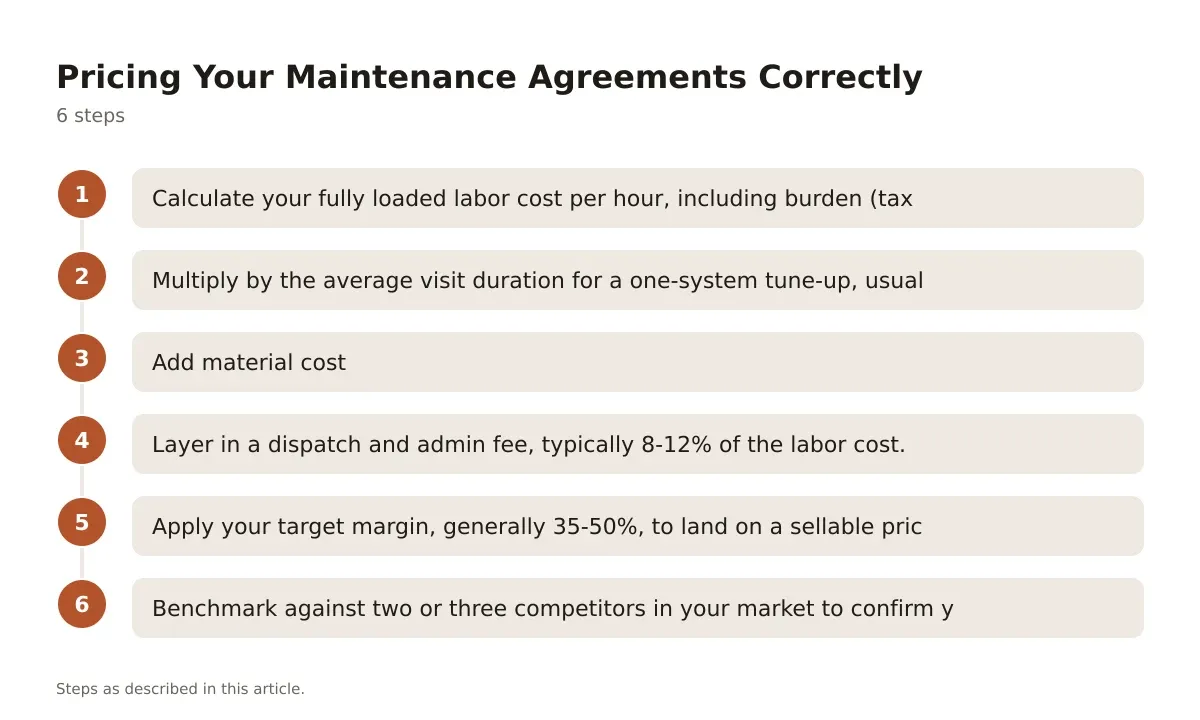
- Calculate your fully loaded labor cost per hour, including burden (taxes, insurance, vehicle, tools).
- Multiply by the average visit duration for a one-system tune-up, usually 1 to 1.5 hours.
- Add material cost: filters, basic chemicals, refrigerant gauges’ wear and tear allocation.
- Layer in a dispatch and admin fee, typically 8-12% of the labor cost.
- Apply your target margin, generally 35-50%, to land on a sellable price.
- Benchmark against two or three competitors in your market to confirm you’re not wildly out of line.
Most shops land between $150 and $300 per system annually for a two-visit plan, with multi-system discounts for larger homes. If you’re writing contracts below that range, you’re probably breaking even at best.
For a deeper breakdown of plan tiers and how to bundle priority service into pricing, check out this HVAC maintenance plan pricing guide, which walks through tier structures contractors actually use.
HVAC Maintenance Cost: Seasonal Tune-Up vs Full System
Not every maintenance visit costs the same, and pricing them identically is a mistake.
A seasonal tune-up is quick: filter swap, coil inspection, refrigerant pressure check, thermostat calibration. It’s low-risk, low-parts-cost work that a tech can knock out in under an hour on a straightforward split system.
Full system maintenance is different. You’re pulling panels, checking amp draw on the compressor, inspecting the heat exchanger for cracks, testing safety switches, and sometimes running a combustion analysis on gas furnaces. That visit can run 2 hours or more and justifies a higher agreement tier.
The mistake a lot of shops make is selling a “full maintenance” package but dispatching techs who only do the seasonal version. Customers notice when the invoice promises a combustion analyzer check and the tech never opens a panel. That mismatch is where cancellations and bad reviews come from. Match your price to the actual scope, every time.
Common Line Items That Inflate or Deflate HVAC Maintenance Cost
Here are the five factors that swing your true maintenance cost per visit the most.
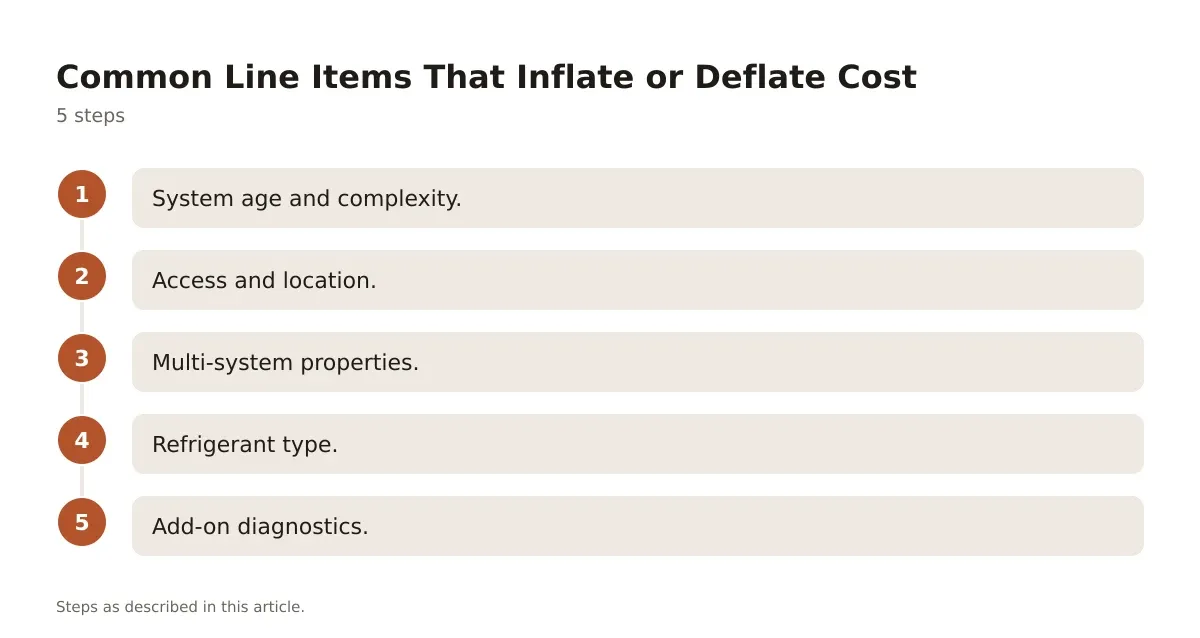
- System age and complexity. A 15-year-old rooftop unit takes longer to inspect and often needs minor repairs bundled into the visit.
- Access and location. Attic units, rooftop packages, and crawlspace furnaces add 15-30 minutes of pure drive-and-climb time.
- Multi-system properties. Commercial accounts with four or five rooftop units change your per-unit labor math entirely.
- Refrigerant type. Legacy R-22 systems cost more to service since the refrigerant itself is expensive and harder to source.
- Add-on diagnostics. Combustion analysis, static pressure testing, and duct leakage checks all add time and should be priced separately or built into a premium tier.
A dispatcher who ignores these variables ends up sending a 45-minute slot to a job that needs 90 minutes. That’s how your schedule slips by 2pm and your techs start rushing safety checks to catch up.
How Technicians Actually Spend the Visit
Walk through a standard residential maintenance call and you’ll see where the time and cost really go.
The tech arrives, introduces themselves, and does a quick walkthrough with the homeowner. That’s 5 minutes, but it matters: it’s where upsell conversations start and where comfort complaints get surfaced before they become callbacks.
Next comes the actual inspection: filter condition, coil cleanliness, blower wheel, electrical connections, refrigerant charge via superheat and subcooling, condensate drain flow, and thermostat operation. On a well-maintained system, this runs 45-60 minutes. On a neglected one, you’re looking at closer to 90, because a dirty coil or clogged drain needs actual cleaning, not just inspection.
Then there’s the paperwork. Digital forms through a platform like Jobber or Housecall Pro cut this down to a few minutes, but shops still running paper checklists can burn 10-15 minutes per visit just on documentation. That’s dead time you’re paying for but not billing separately. A tight HVAC maintenance checklist built into your field app keeps techs consistent and keeps that admin drag from eating your margin.
Quick Q&A: Pricing Questions Dispatchers Ask Most
Should maintenance visits ever be free to win new customers? No. A free visit sets an anchor price of zero in the customer’s head, and it’s hard to walk that back next year. Discount the first visit if you must, but never give away the full inspection.
What’s a reasonable markup on parts used during maintenance? Most shops run 50-100% markup on filters, capacitors, and minor parts replaced during a tune-up. That markup helps offset the labor you’re not fully billing for on a flat-rate agreement.
How do I price maintenance for commercial accounts with multiple rooftop units? Price per unit with a volume discount starting at the third or fourth unit. A property with eight packaged units isn’t eight times the drive time, so your per-unit rate should step down as the count climbs.
Getting Your Maintenance Pricing Right for the Long Haul
The contractors who make real money on maintenance agreements treat the pricing model like a P&L line, not a loss leader bolted onto repair revenue. They track cost per visit by technician, by zip code, and by system type, then price tiers that actually reflect the work being done.
The ones who struggle are usually underpricing because they’re scared of losing the account to a competitor charging $99 a year. That race to the bottom doesn’t end well. It ends with techs rushing combustion checks and skipping coil cleaning because the math doesn’t support the time it actually takes.
Get your cost inputs right first: loaded labor, parts, dispatch overhead, and drive time. Then build your price on top of that, not the other way around. A maintenance agreement priced with real numbers behind it protects your margin and keeps your techs doing the job properly instead of racing the clock.
Frequently asked questions
What is the average HVAC maintenance cost per visit?
Most residential tune-ups cost contractors $45 to $90 in direct labor plus $10 to $25 in parts, depending on region and system complexity. Retail pricing to the homeowner typically lands between $150 and $300 annually for a two-visit agreement on a single system.
How often should HVAC systems get professional maintenance?
Twice a year is standard: once before cooling season and once before heating season. Commercial systems with heavier runtime sometimes need quarterly checks, especially rooftop units exposed to weather extremes.
Why do maintenance agreement prices vary so much between contractors?
Pricing differences usually come down to scope and loaded labor cost. A shop including combustion analysis, static pressure testing, and priority scheduling will price higher than one offering a basic filter-and-glance visit, and labor burden varies a lot by market.
Is it worth offering discounted maintenance plans to attract new customers?
A modest introductory discount can work, but don’t go below your cost floor. Discounting too deep trains customers to expect rock-bottom pricing every renewal, which makes it hard to raise rates later without losing the account.
How do I calculate my true cost per maintenance visit?
Add loaded labor cost for the visit duration, parts and consumables, an allocated dispatch and admin fee, and vehicle costs tied to drive time. Compare that total against your current agreement price to see whether you’re actually hitting your target margin or just breaking even.