Think a sharp estimator with a calculator beats HVAC estimating software? That myth costs most HVAC shops two or three points of margin a year, quietly, on every change order they forget to bill.
HVAC estimating software isn’t about pretty proposals. It’s about pricing equipment, labor, and ductwork fast enough to win the job, and accurately enough to still profit once the crew is on the roof.
Why Manual Estimating Keeps Bleeding Margin
A tech pricing a rooftop unit replacement off memory and a spiral notebook will miss something. Not because he’s sloppy, but because manual takeoffs can’t hold fifteen variables in your head at once: tonnage, duct static, refrigerant line length, disposal fees, permit costs, crane rental.

Shops running spreadsheets typically see estimate turnaround of a day or two. That’s death on a commercial bid where three other contractors already walked the site with a tablet. By the time your quote lands, the GC has moved on.
The bigger leak is change orders that never get captured. A residential changeout that hits unexpected asbestos-wrapped ductwork, or a commercial job where the customer adds a second zone mid-install, needs to get priced and signed before work continues. Paper-based shops lose that money constantly because nobody stops to write it up.
Estimating software forces consistency. Every job pulls from the same labor rates, the same vendor pricing, the same markup rules. You stop relying on one estimator’s gut feel and start running a repeatable process.
Core Features That Separate Real Tools From Glorified Spreadsheets
Not every “estimating” tool deserves the name. A lot of them are digital order forms with a markup field bolted on.
The features that actually matter for an HVAC shop:
- Flat-rate or unit-price libraries you can update in bulk when distributor pricing shifts
- Digital takeoff tools for ductwork, linear footage, and equipment counts, ideally tied to a tablet so techs measure on-site
- Labor rate tables broken out by task type (install, startup, commissioning), not one blended hourly number
- Change order workflows with e-signature capture, so scope creep gets billed instead of absorbed
- Integration with accounting software like QuickBooks so a signed estimate flows straight into an invoice
If a platform can’t update your flat-rate book in under ten minutes when a vendor raises prices, it’s going to drift out of date and start costing you money on every job that uses stale numbers. Test that before you sign anything.
Comparing the Leading HVAC Estimating Platforms
Pricing models vary a lot here, so treat the table as a starting point, not gospel. Confirm current numbers directly with each vendor before budgeting.
| Platform | Best For | Pricing Model | Standout Feature |
|---|---|---|---|
| ServiceTitan | Mid-size to large residential/commercial shops | Subscription, quote-based per technician seat | Built-in flat-rate pricebook with photo/video estimates |
| Housecall Pro | Small to mid-size residential shops | Monthly subscription tiers | Simple mobile estimating tied to scheduling and dispatch |
| FieldEdge | Established residential HVAC/plumbing combo shops | Subscription, quote-based | Deep QuickBooks sync and flat-rate pricing integration |
| Successware | Multi-location HVAC operations | Subscription, per-user | Strong reporting on estimate-to-close ratios |
| Joblogic | Commercial HVAC and facilities contractors | Tiered monthly subscription | Asset-based maintenance estimating for recurring contracts |
Most of these run a free trial or demo period, so walk a real job through each one before committing. The differences show up fast once you’re building an actual duct takeoff instead of watching a sales demo.
Quick-Picks: Which Tool Fits Your Shop Size
If you don’t have time to read five vendor comparisons, here’s the short version based on shop type and job mix.
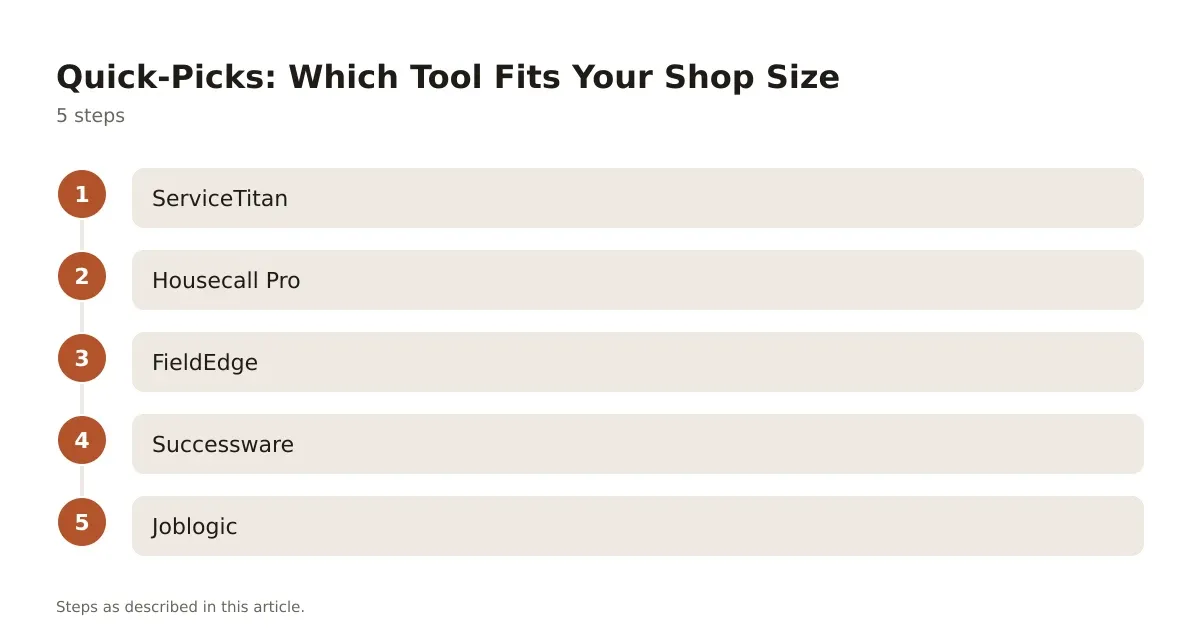
- ServiceTitan for shops doing $3M+ in revenue that need estimating tied to dispatch, inventory, and payroll in one system.
- Housecall Pro for solo operators and two-to-five truck shops that need fast, mobile residential quotes without a steep learning curve.
- FieldEdge for combo HVAC/plumbing shops already deep into QuickBooks who don’t want to rebuild their accounting workflow.
- Successware for multi-location operators who need standardized pricing and visibility across branches.
- Joblogic for commercial contractors managing planned maintenance agreements alongside one-off estimates.
Pick based on your actual job mix, not the flashiest demo. A shop doing 80% service calls and 20% replacements needs different tools than one living on commercial design-build work.
Building Your Flat-Rate Pricebook the Right Way
Software is only as good as the data behind it. A flat-rate pricebook with outdated equipment costs will quietly erode margin on every job, even with great software running it.
Start with your real labor cost per hour, fully burdened, including insurance, vehicle, and overhead, not just the tech’s wage. Most shops land somewhere between $75 and $125 per billable hour once burden is included, though that varies heavily by market and fleet size.
Layer in current equipment and material pricing pulled directly from your distributor’s current price sheet, refreshed monthly. Add markup tiers by category: equipment typically carries a lower markup percentage than small parts and accessories, since the dollar amount is already high.
Build in task-specific line items instead of one generic “install” rate. A straight condenser swap takes different labor than a full system changeout with new line sets and a plenum rebuild. If your pricebook treats those the same, you’re underbidding one and overbidding the other every time.
Review the book quarterly. Vendor price increases, fuel surcharges, and labor rate adjustments all erode accuracy if nobody updates the numbers.
Connecting Estimates to Dispatch and Invoicing
The real payoff shows up when estimating software talks to the rest of your stack. A standalone estimating tool that doesn’t sync with dispatch or accounting just creates another data entry step for your office staff.
Look for a platform where an approved estimate automatically generates a work order, assigns the right technician based on certification (EPA 608 for refrigerant handling, for example), and pushes the signed price straight into invoicing. That single handoff eliminates the re-keying errors that happen when office staff manually transfer numbers between systems.
This matters most on commercial jobs with multiple phases. A rooftop unit replacement might involve crane scheduling, electrical subcontracting, and a startup/commissioning visit weeks later. If your estimate doesn’t carry through to each of those dispatch events with the correct pricing attached, somebody ends up re-estimating work that’s already been priced, which wastes office hours and invites billing mistakes.
Contractors running plumbing alongside HVAC run into the same integration question from the other direction, and the considerations around plumbing estimating software line up closely with what HVAC shops should demand from their own platform.
Common Estimating Mistakes That Still Happen With Good Software
Even with solid software, shops still shoot themselves in the foot. Here’s where it happens most:
- Letting techs free-type prices instead of pulling from the pricebook, which breaks consistency across the team
- Skipping the digital takeoff step on duct-heavy jobs and eyeballing linear footage instead
- Failing to flag change orders in real time, so the customer signs off verbally and nothing gets documented
- Not training new hires on the software before sending them solo, leading to inconsistent quotes in the first few months
- Ignoring the reporting dashboard that shows estimate-to-close ratio, so nobody notices a pattern of losing bids at a certain price point
Fixing the first two alone usually recovers more margin than switching platforms entirely. Software doesn’t fix discipline problems. It just makes them visible, assuming somebody’s actually looking at the reports.
Getting Your Estimating Process Dialed In
The shops that win commercial bids and keep residential margins healthy aren’t the ones with the fanciest software. They’re the ones that pair a solid platform with a disciplined pricebook and a team trained to use both.
Start by auditing your current turnaround time and estimate-to-close ratio before you shop for new tools. If you don’t know those numbers today, any software purchase is a guess instead of a decision.
Whichever platform you land on, the real work is maintaining the pricebook and holding your team accountable to using it every time, not just on the big jobs.
Frequently asked questions
What does HVAC estimating software typically cost?
Pricing varies widely by platform and shop size, with most vendors using tiered monthly subscriptions or per-user/per-seat pricing rather than a flat rate. Smaller platforms built for solo operators tend to run lower monthly costs, while full-service platforms bundling dispatch, inventory, and accounting integrations price based on technician count. Always request a quote based on your actual crew size rather than relying on advertised starting prices.
Can HVAC estimating software handle both residential and commercial jobs?
Most major platforms support both, but the features that matter differ. Residential estimating leans on flat-rate pricebooks for fast quotes, while commercial work needs digital takeoff tools, multi-phase pricing, and change order tracking for longer projects. Check whether a platform’s commercial features are genuinely built out or just a residential tool stretched to fit.
How long does it take to switch from spreadsheets to estimating software?
Most shops need two to four weeks to build out an accurate flat-rate pricebook and train staff, assuming someone owns the rollout. Rushing this step is the most common reason adoption fails, since techs revert to old habits if the pricebook isn’t ready on day one. Budget time for a parallel run where both systems operate side by side before fully cutting over.
Does estimating software replace the need for a dedicated estimator?
No, it speeds up the estimator’s work but doesn’t replace judgment on complex commercial bids, unusual site conditions, or custom ductwork runs. Software handles repeatable pricing logic well; it still needs a human reviewing line items on anything outside a standard changeout. Shops that remove human review entirely tend to see pricing errors creep back in within a few months.
What’s the biggest mistake shops make when adopting new estimating software?
Importing an old, outdated pricebook without correcting labor rates and equipment costs first. The software looks new, but the numbers driving it are stale, so margin problems carry over instead of getting fixed. Treat the switch as a chance to rebuild your pricing from actual current costs, not just a data migration exercise.